The scout remembers that, until the early 1970s, tram track was exposed beside the Clock Tower and the impressions of it could be seen along Queen Street, where the rails lay just beneath the surface.
The depot in Heavitree Road was still used by Devon General. Buses could be seen straddling the inspection pits between the tram rails.
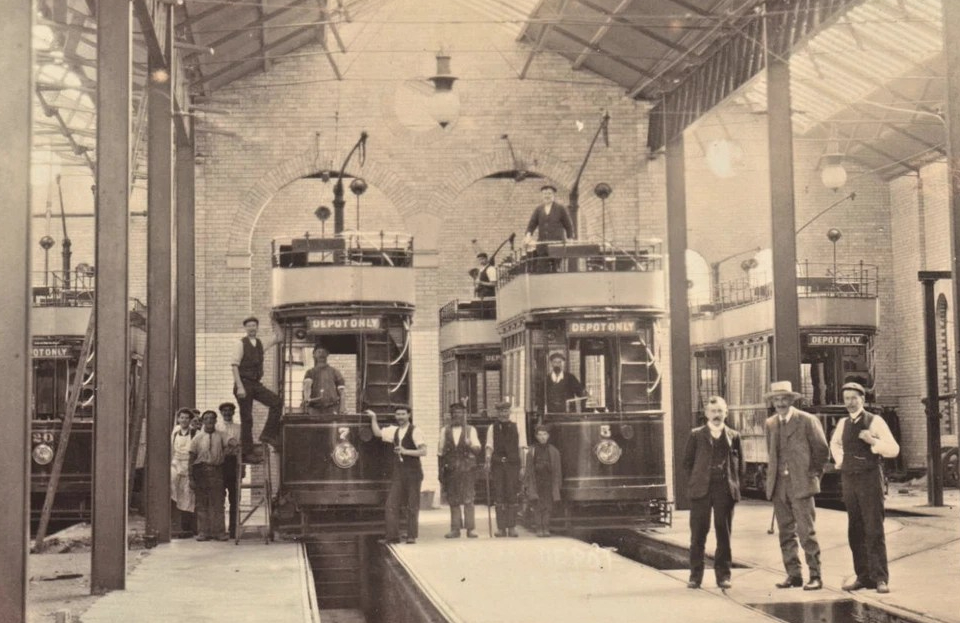
Just before the electric trams started in 1905, two essential elements were built: a replacement bridge across the Exe and a new power station.
The station ceased generating in 1955 and the building today houses Quay Climbing Centre. This tour has glimpses of the frontage and features of the turbine hall, with its white glazed bricks and travelling crane still in situ.
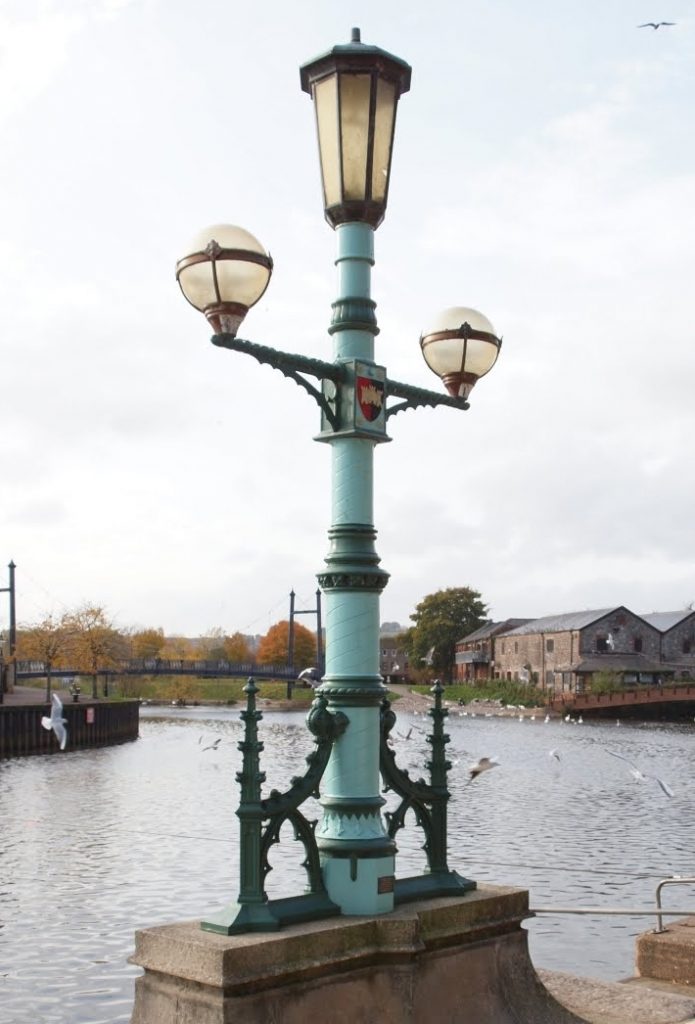
All that remains of the river bridge are two lamp standards, which now stand on the quay.
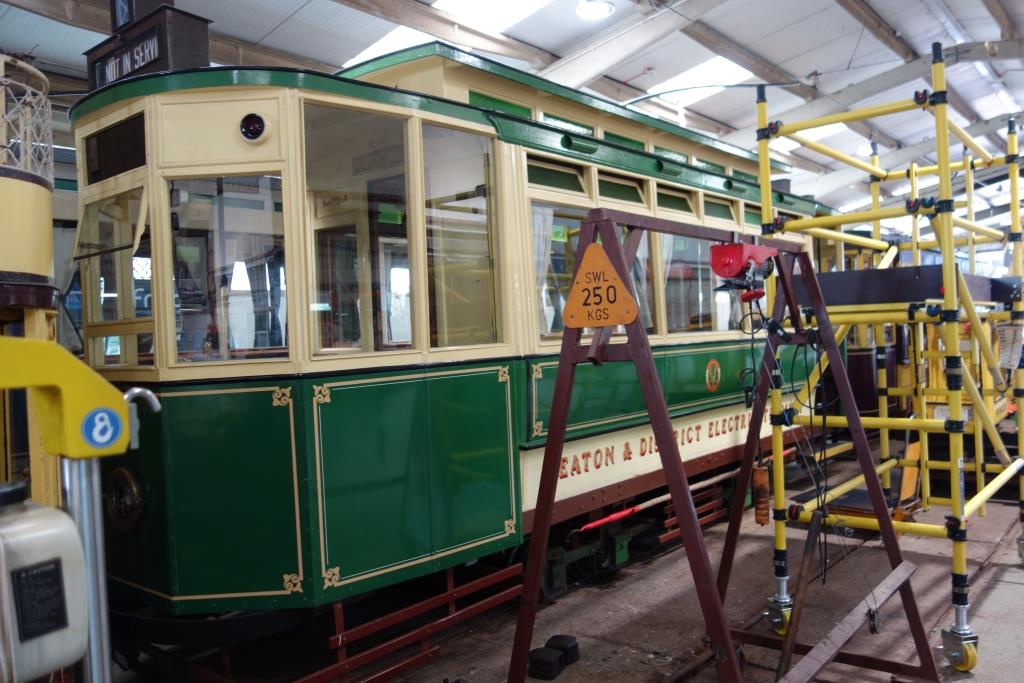
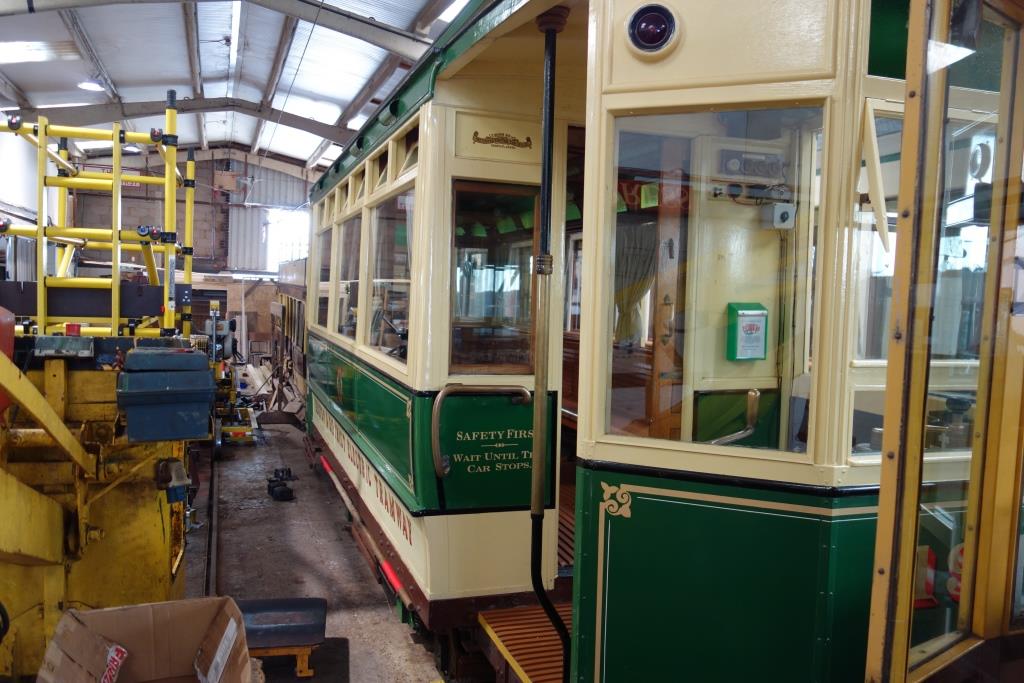
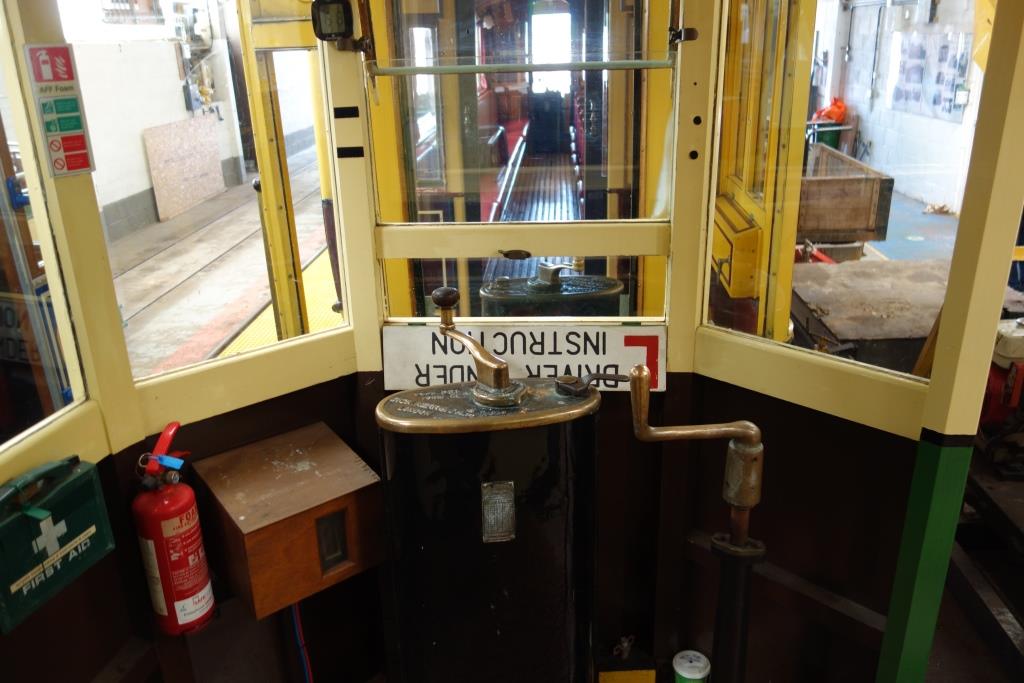
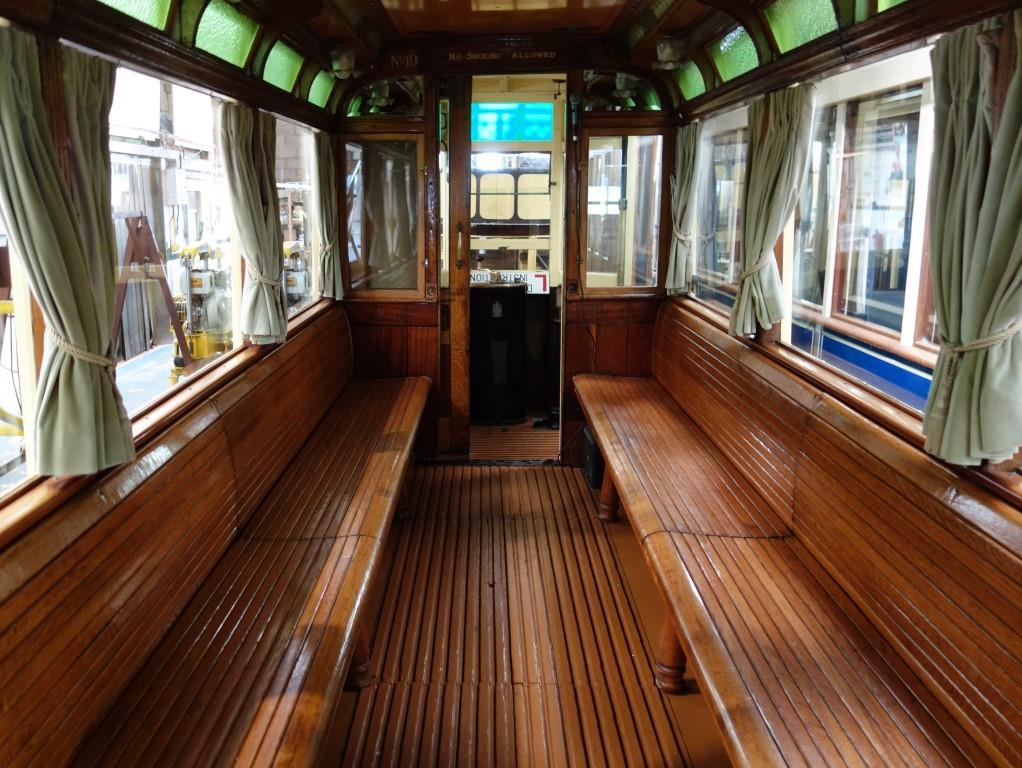
Of the 37 tramcars bought by Exeter Corporation, the bodies of five could still be found many years after their withdrawal. Two in a reduced and decayed state languished in a field outside Exeter and another two were used as a store in Stoke Canon. Car No. 19 was very much more fortunate: it was rescued and now runs as a single decker on the two-foot-nine gauge Seaton Tramway.
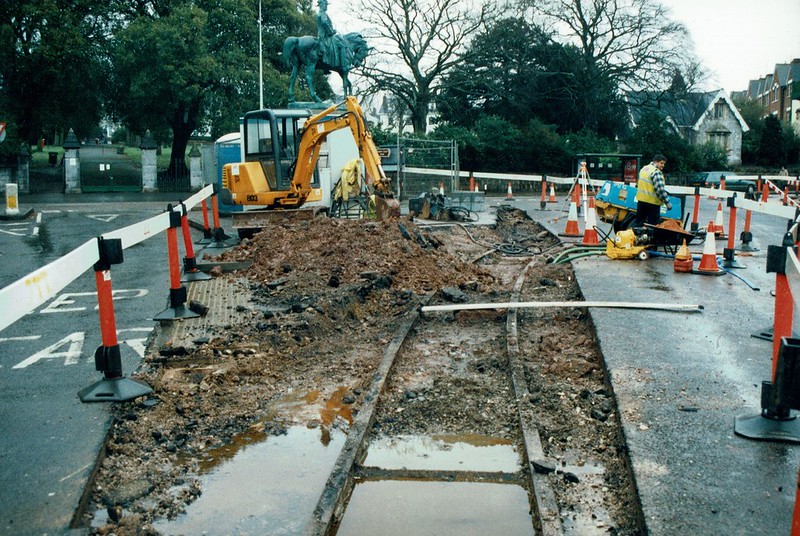
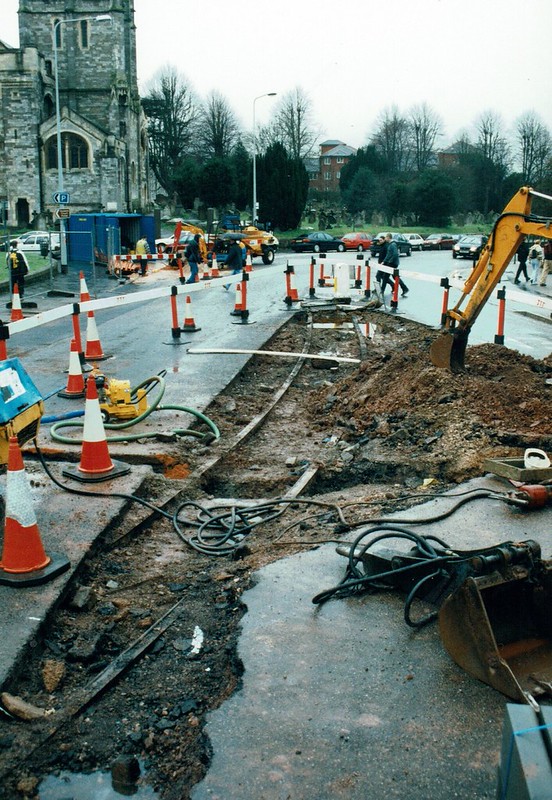
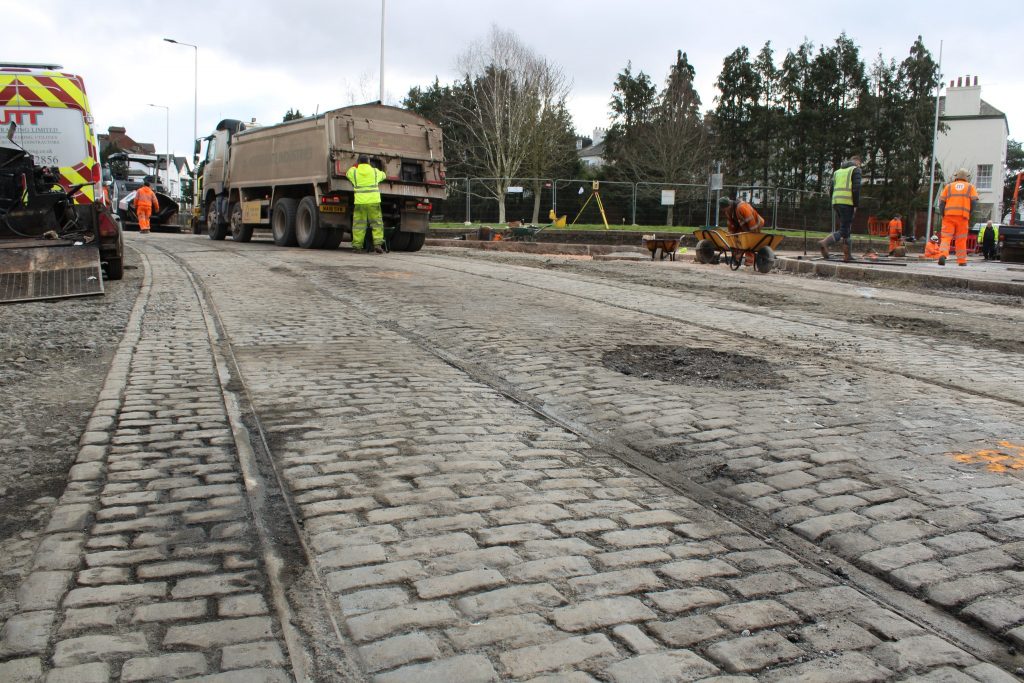
How much more remains under the surface of Exeter’s streets?
Tramway undertakings were responsible for the road surface between and beside their tracks, which greatly added to the cost of maintenance, especially as road traffic became greater and imposed heavier loads.
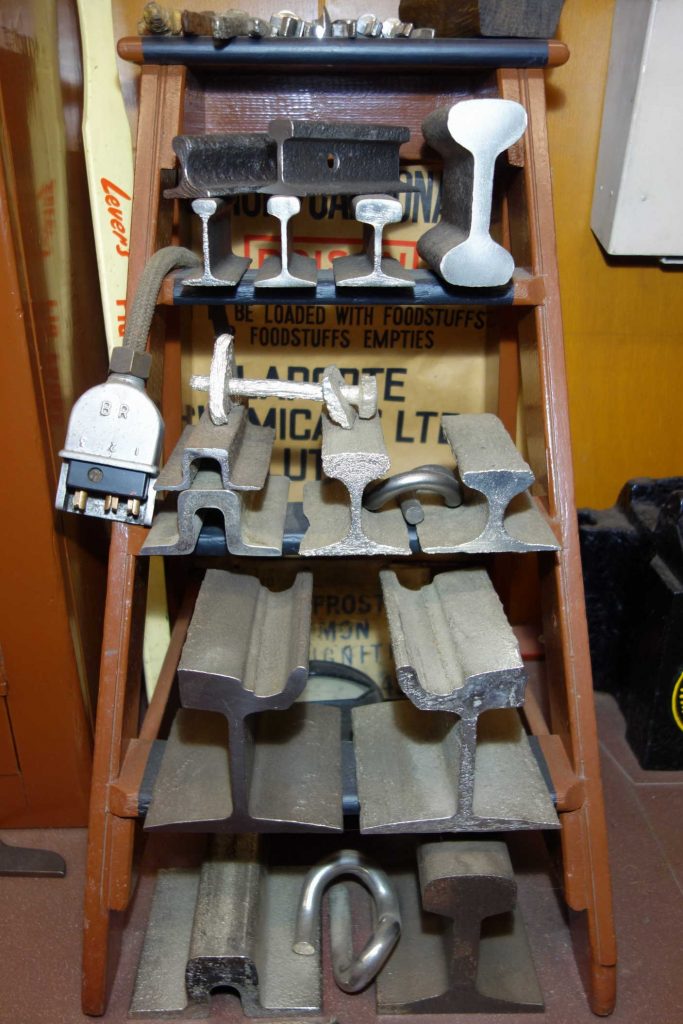
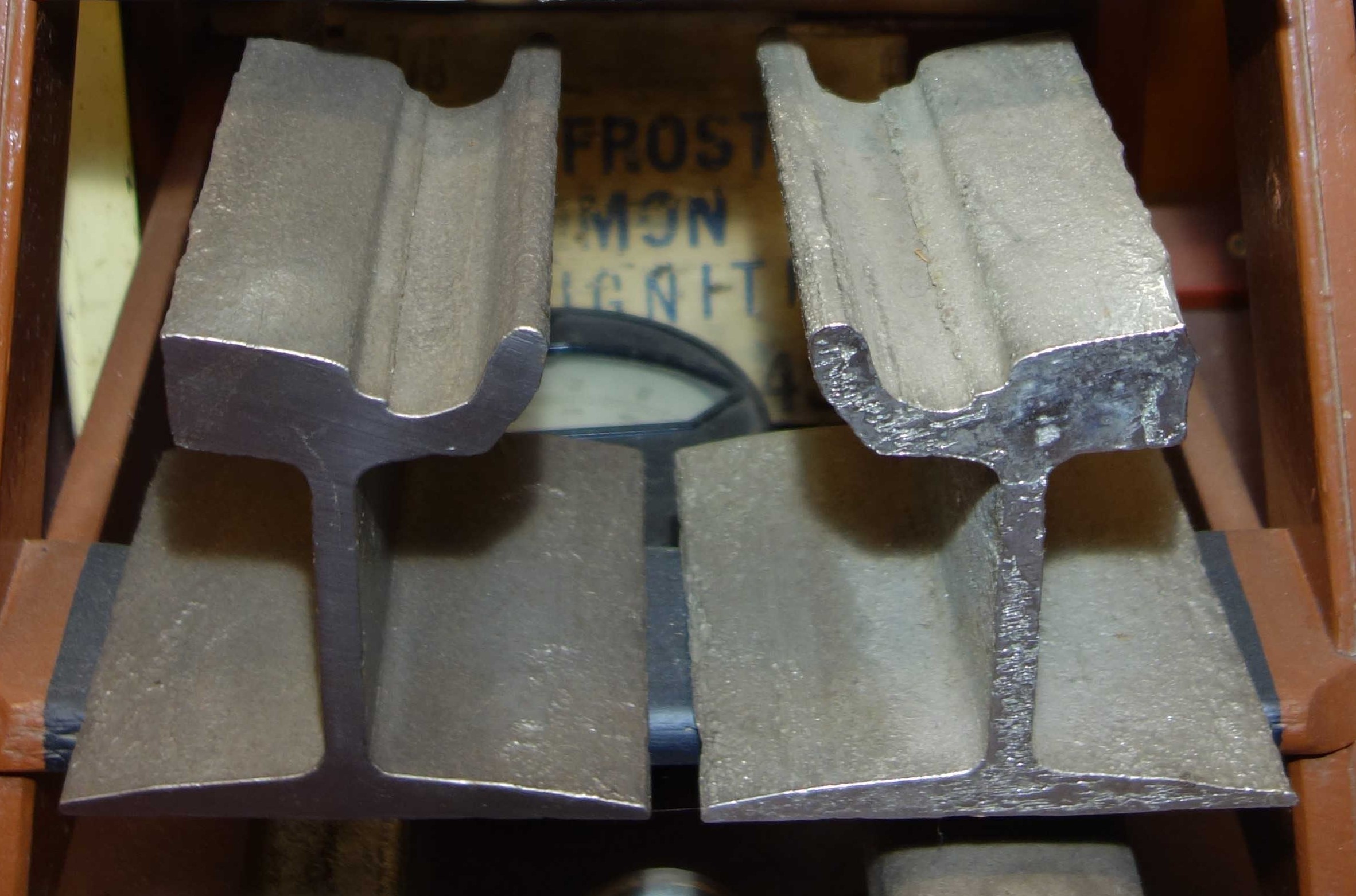
When the tramway at the foot of St. David’s Hill was exposed, the scout was given some lengths of rail. These he cut into six inch pieces, some of which were sold.
The chap using the breaker hadn’t been told that there were tramlines beneath the surface. One of the rails bore the mark of the breaker bit.
A piece was presented to Seaton Tramway and two are in the exhibition at Christow, one acid dipped and lacquered and the other nickel plated.
It is hard to explain how the profile became worn like this; it is almost as if, in their final years, the cars were running on their wheel flanges.
Right: One of the two superbly crafted lamp standards which remain from the 1905 Exe Bridge. They incorporate Exeter’s three-castle motif. Two stood at each end, with two more in the middle of the bridge.
More survives of the 1778 bridge which the 1905 one replaced. The stone balustrades recovered from it can be seen on the terrace at Culver and on the little bridge over Culver Brook, near the main road.
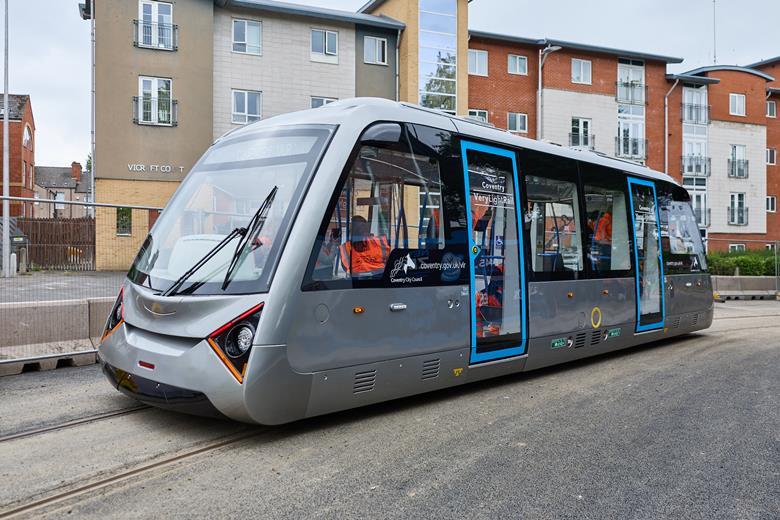

Through the streets, amid the traffic, and out onto the rail network.
Once, a cyclist freewheeling down St. David’s Hill and intending to go towards Red Cow would have had to remember to cross the tram tracks at a safe angle, lest they caught his front wheel. Today, that risk can be eliminated by the use of rubber inserts which are depressed by the tram’s wheel flanges but which present a smooth surface for road users.